Heavy Information
On information's occupancy of reality and our interaction with its resultant energy

1’s and 0’s
It’s becoming increasingly intuited that information seems to exist on its own immeasurable substrate of reality.
Information takes up a certain kind of space within our, well, space - or whatever the habitable void around us is.
And as we increasingly bounce up against the ceilings of modern physics, we fill in more blanks with the quantum sides of reality; the more we do this, the more we elevate concepts of the subjective, of the abstract and of the idealistic.
So while the majority of our environment remains out of reach to our direct sensory experience — forcing us to write it off as dark energy and dark matter — and while we ourselves navigate atop planes of being that abide by our rules of physics and constructs of thermodynamics, we know that there are obviously other planes.
Information, it seems, may have its own strange way of maneuvering and occupying the same space we do.
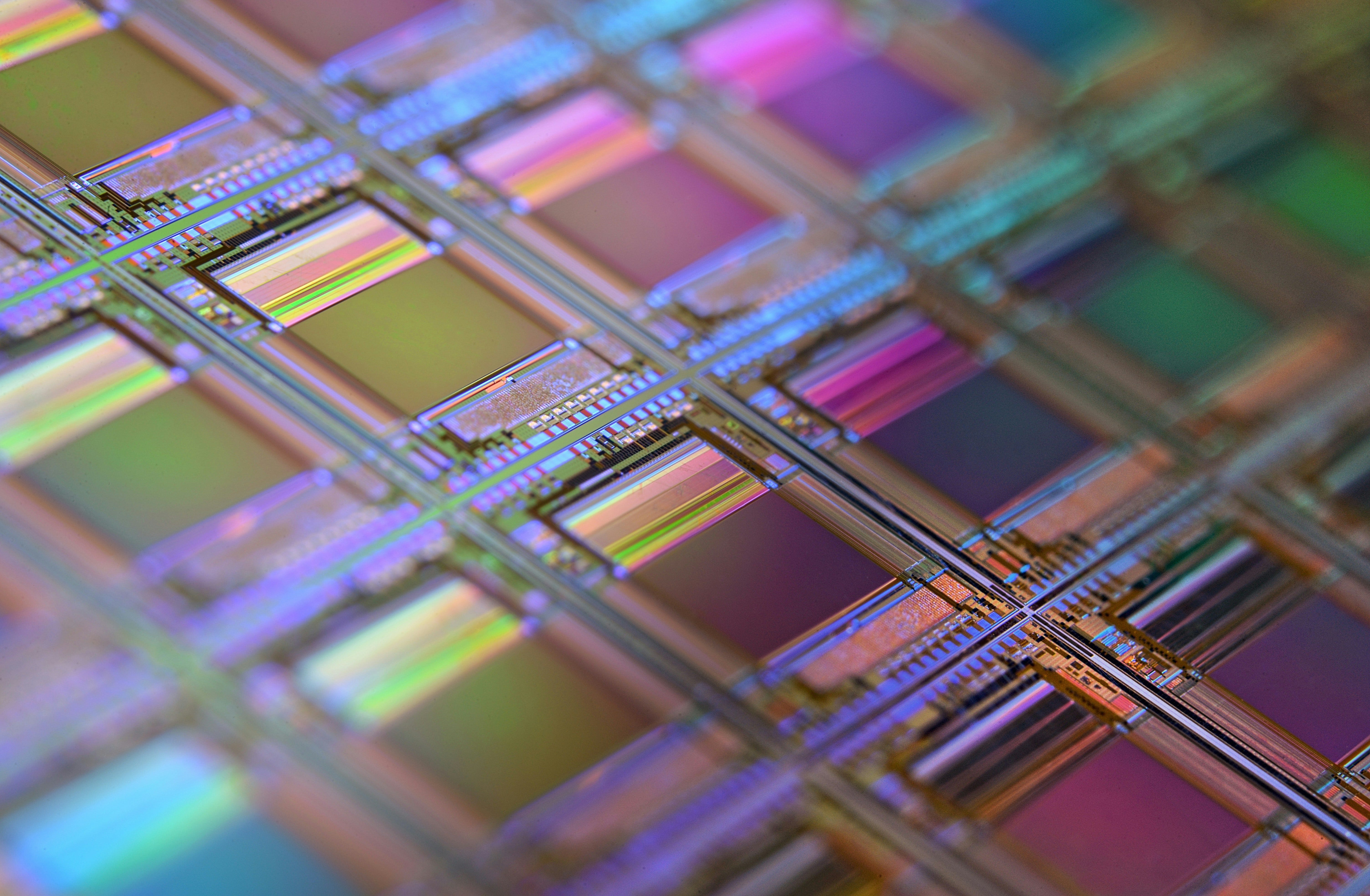
“Adding information — a 1, instead of a 0 — requires storing an electric charge. Each electron has a very small weight (something like 9.10938215 × 10⁻³¹ kg) so adding electrons does mean adding a tiny amount of weight.
How much weight? To get a real-world answer, you have to make assumptions about how many electrons constitute a charge-state in flash memory, but one calculation says that 1GB of flash memory completely filled with 1s weighs something like 729 femtograms more than the same memory filled with zeros.”
- Fred Langa
Informed Causality
As Information Theory approaches its century mark, it increasingly entangles itself with the influx of quantum findings that bolster many of its presumptions.
There are binary-based layers of the liminal world that inexplicably hold mass — or at least exhibit the effects of mass — and these layers mean quite a bit to our own subjective navigation through space and time.
The binary process of moving from certainty to uncertainty (/vice versa) factors into the mass budget of reality; higher entropy means higher uncertainty, which requires greater bandwidth.
Yet whatever these layers contain remains out of the reach of our sensory grasp, taunting us to ascribe some kind of idealistic quality to our causal reality. But the energy is somehow there, compartmentalized in labels of dark matter and in concepts like the observer effect.
And, increasingly, our collective curiosity is pointing in the direction of information as a force not of nature, but by nature; no less important, and in many ways more real than anything else.
"Information is the resolution of uncertainty”
- Claude Shannon
The energy of information and its dance with entropy, causality and complexity demands various physical effectuation, though none has yet to be associated.
But the more we zoom in or look out, the more we see that classical physics and general relativity leave more questions unanswered than we’d otherwise like to accept, and trusting the process is falling short of being a long term stop gap.
Information is a bigger part of the causal framework of physical reality; entropy demands it, and we exist out of it.
And where this seems to matter most is in the fact that the non-physical nature of reality is where true meaning comes from; that the non-matter ultimately matters more than we’d like to think.
Particle Interactions
As we continuously drift towards the subjective waters of existence, we increasingly recognize the power of the conscious interfacing undertaken throughout all our methods of scrutinizing the world around us.
It’s the data that unfolds from the interactions we have with our environment that offers us any kind of meaning to reality.
Particle collisions.
Our consciousness, sifting through such data, allows us to navigate reality not only successfully but also meaningfully.
Like gravity or time, information has a large bearing on grounding our existence, but it offers us more than just survival — it offers us purpose, and a chance to define the parameters of success and failure.
And in the way that our defiance of physics helps to improve the qualitative and quantitative scopes of existence (say, in building upwards or kicking a soccer ball through a net), our relationship with information is similarly constructive.
If information equates to meaning, it means that we could be (and should be) very selective of the data we consume; it means that any meaning we ascribe to our existence is intimately tied to the interactions that we initiate.
Input consecrates output; output is what we use to define meaning.
Ergo, we have a tremendous amount of discretion in how we metaphysically structure our existence. As we can alter our relationship with time and space, so can we with information.
We’re the shareholders and the proprietors of the outcomes we enact — information that we choose to use or discard.
Currents of Currency
There’s weight to information.
Maybe not the palpable kind that we can dissect, but certainly more than the ineffable kind that we overlay onto vision boards or imaginative ambitions.
Information exists somehow independently of us — possibly even contributing to dark matter’s mass budget — but somehow only matters on the more subjective avenues of existence.
For now.
If we increasingly find ways by which information’s mass alters spacetime dynamics, we’ll have to reinvent some of the wheels atop which numerous dynamics of physics ride, likely in the ongoing quest to reconcile the quantum with the classical.
But until then, as we chip away at the ways by which we grow meaning from the fertile soils of our interactions with reality, we should maybe consider the ways by which information really effects us. We are what we eat.
Perhaps we can consider it the ultimate cosmic currency, a form of causal energy more valuable than anything else.
It may just teach us that we should spend a bit more wisely when it comes to the budgets and bandwidths of our attention.