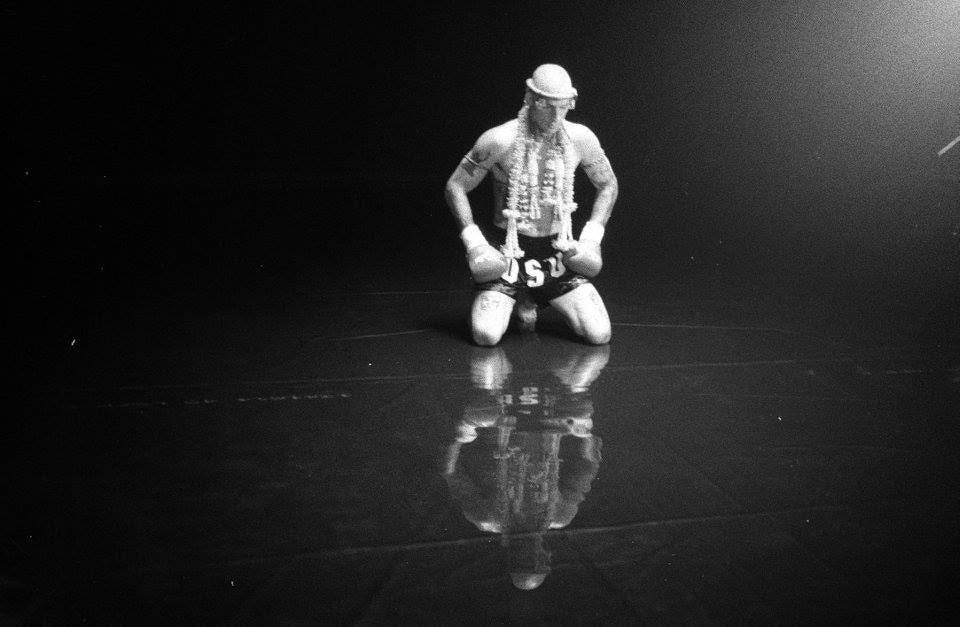
“Think of yourself as dead. You have lived your life. Now, take what's left and live it properly. What doesn't transmit light creates its own darkness.”
- Marcus Aurelius
In nature, the evolution of any organized system depends on the continuous conversion of information; the more a system optimizes the transformation of environmental input into behavioural output, the greater the evolution.
And that information - the input - isn’t just derived from the defining moments of existence (i.e. the victories or defeats, milestones or misfortunes), but from everything in between; the ritual before a battle; the humility after a victory; the stature after defeat.
The input that flows from the reverberations of action, inaction or reaction; the static or dynamic movement through opportunity; the decision or indecision against possibility.
That’s the real tale of the tape.
“The fight is won or lost far away from witnesses - behind the lines, in the gym, and out there on the road, long before I dance under those lights.”
- Muhammad Ali
The artistry of martial arts is often exhibited through the movements made in the ring or atop the mat, but there’s a lot left unsaid about the unseen.
While variables of discipline or intelligence may be on full display, what’s often missed is the deeper battles against elements of doubt or fear, of surrendering control, taming the ego or swallowing defeat.
These intangible interactions, which unfold and evolve at a pace unknown to even the fighters themselves, are what infuse meaning into every win, loss and knockout.
Moreover, these variables account for the friction that precedes progression, functioning as a necessary obstacle that either informs or obstructs - destroys or constructs.
Failure, as we know, can function as either an informational process or a pretext to quit; a motive or an excuse, cause or effect.
“I got a real late start to Muay Thai, not stepping into a gym until I was almost 23. I spent the majority of my youth partying and wasting away. Never thought about the future, never thought I’d make it to the future to be honest with you, so I didn’t see the point.”
- Kevin Ross
World Muay Thai champion Kevin Ross is a prime example of the duality that underlies the relentless progression and the internal friction that works to catalyze fear or failure into information rather than resignation.
A pioneer of American Muay Thai, Ross turned tragedy into legacy; motivated by loss and galvanized by doubt, he started a journey that led him through a dominating campaign to collect championships and take on the elite class of Thai fighters, on their turf and under their rules.
Nicknamed ‘The Soul Assassin’ for his relentless fighting style primed to break his opponents will, Ross’ official Muay Thai records will show 45 wins (14 by KO) and 15 losses; his overall career tally sits at 58-18 (which includes 1 MMA fight, 4 boxing , 2 San Shou, 1 shootboxing and a handful of kickboxing) but the only record that really counts relates to the unquantifiable wins/losses that he’s accumulated against himself.
“I was a full blown alcoholic before I even turned 21. I had this dream of being a fighter ever since I was a kid. However, I allowed all of my doubts and fears to keep me from ever going after it. Am I too old to start, will I ever be good enough, no one will take me seriously, it’s just a pipe dream, etc.”
- Kevin Ross
From cutting his alcohol addiction cold turkey to living out of gym closets, studying and making art on the side and to reformulating the odds that seemed infinitely stacked against him, Ross exemplified what happens when fear, failure, and doubt can be leveraged against probability, redefining what should be possible.
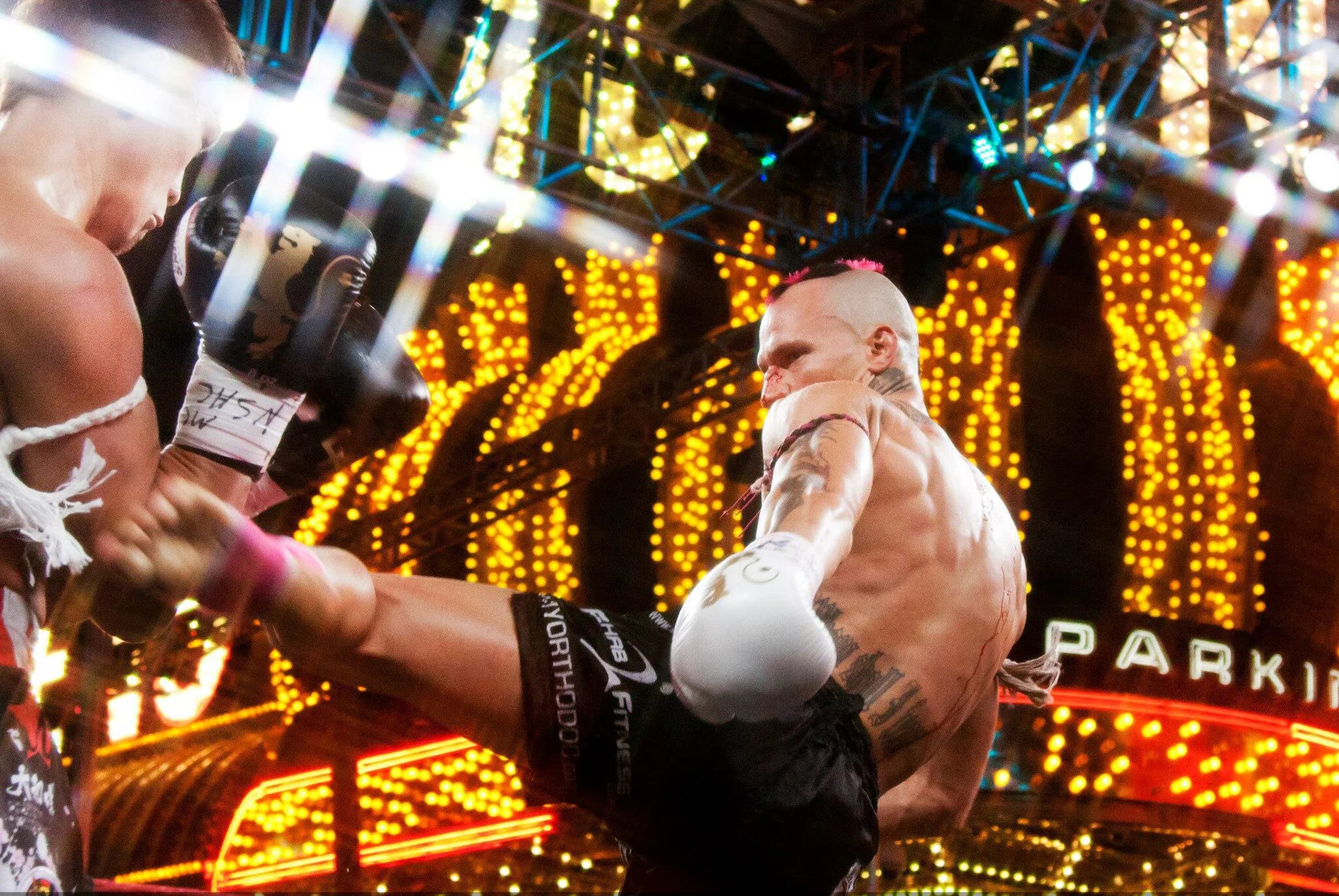
Below is an interview with Kevin on the constructive potential of those things that ultimately work to make or break us; because the decision, as he details and as he has shown through everything he’s undertaken, is always up to us.
I’m not going fucking backward.
M.W.: What’s your relationship with fear like now versus what it had been like at the start of your career? When did it stop being something that happened to you versus something that you could work with?
Have you completely eliminated it by this point or is it still always present?
K.R.: Prior to turning my life around and going after this dream of fighting at the age of 23, I lived my life in fear. I was consumed and controlled by it. It paralyzed me.
I had to face fear head on day one, then, after my first fight, I realized that the lessons are unending.
Once you embrace that and understand that it is all part of the process in which we are either getting better or getting worse, stronger or weaker, going left or right.
Putting things into that binary context makes it a lot simpler and takes the debate away, or at least the understanding of it.
M.W.: And fighting forces that decision to be made pretty quickly..
K.R. There are very few things that force you into that state, where fighting obviously is one of them because you’re in this very dangerous situation so you have to tap into that side of things..
There’s no time to think, you just have to click into this altered state. Which is one of the things I love so much about fighting because it’s one of the few things in this life that forces you to be very present and you don’t really have a choice but to be present.
Getting yourself in that state without that external stimulus takes practice and discipline.
With fighting, when I started, it was a completely singular focus to me, because of how much time I had wasted not going after this out of fear and all the excuses I gave myself.
Once I finally started, it was basically all or nothing, as well as the fact that I was trying to make up for lost time.
Not only lost time but also lost lives, my friends that I had lost that I realized never had a chance to go after these things. I didn’t think I’d ever get a chance to go after these things, I didn’t think I was ever going to live past the age of 20 and now here I am, now I’m viewing every moment of my life as extra credit.
Because I had lived so much of my life in fear prior to that and let all these excuses keep me from going after anything or even allowing myself to think about possibilities, it was realizing that I had a choice in all this and that I could use all of these fears to limit me or I can use them as fuel to push past it.
Whenever fear would come up, pain would come up, hesitation would come up, I would put things into a very simple binary context – I said you’re either gonna go left or you’re gonna go right. So you’re either gonna go through this regardless of what it is or you’re gonna go the other way.
M.W. You’re not going backward.
I’m not going fucking backward.
A lot of people think I don’t have fear, I don’t deal with pain the same way people do – I definitely do and I probably deal with it more than most – it’s just a matter of I’ve been able to understand that it’s a decision – whereas most people get stuck on that debate; they don’t realize that they are making a decision one way or the other. You’re deciding not to go after this thing, whatever your reason and excuse is, even if they’re completely valid, you have to understand that you’re making a choice.
Even if someone has a gun to your head, you still have a choice. You can never blame somebody else for forcing you or making you do something that you’ve decided to do..
That’s what clicked in my brain as soon as I started – you’re making decisions. I made that choice real quick cause I’m not going the other way, whatever’s infront of me, I’m going through it.
M.W.: And fighting puts that into perspective pretty quick..
K.R.: So many things in martial arts translate to every day life. These things are forced in your face on the daily, whereas in regular life you can avoid them a little bit, it’s easier to not make decisions where when someone’s in front of you hitting you.
Every lesson in life can be learned in the gym.. martial arts is a microcosm of our lives because you’re confronted with things you’ll inevitably be confronted with in your life whether it’s sickness or difficulty; it’s confronting difficulties.
The ring doesn’t lie.
M.W.: The common denominator that seems to flow through everything is that you can take any process and look at is as constructive or destructive. When you live in fear, is it going to be something that destroys you or do you build off of it?
To your point about the extra credit – if you’re looking at everything as time running out and diminishing, it really confines you. But when you shifted your perspective to an extra credit framework, the quote you sent me from Marcus Aurelius about thinking of yourself as being dead – it speaks to the fact that the scarcity approach can stunt your movement – if you can get away from that, you’re free to move and construct.
Entropy demands that things decay but consciousness runs contrary to that, so when you’re in a ring with Saenchai, you feel that present moment more than ever.
K.R.: I was fortunate that I had so many instances of that where I’m going up against someone that I shouldn’t necessarily be in the ring with.
For me, coming up, those are the only people I want to fight. Saenchai was definitely the extreme version of that.
It was one of those things where I had to be in a completely different level of consciousness – I couldn’t even describe that to somebody.
Even now, whether it’s that fight or any other, I look at these fights and it doesn’t seem like that’s me; in a lot of ways it wasn’t me because I was on a completely different plane of existence.
There’s no time to think, there’s no time to do anything, anything you’ve done prior to this – whether that’s training, your everyday life, your thought process, your ability to deal with difficulties – all of that comes out in there.
The ring doesn’t lie.
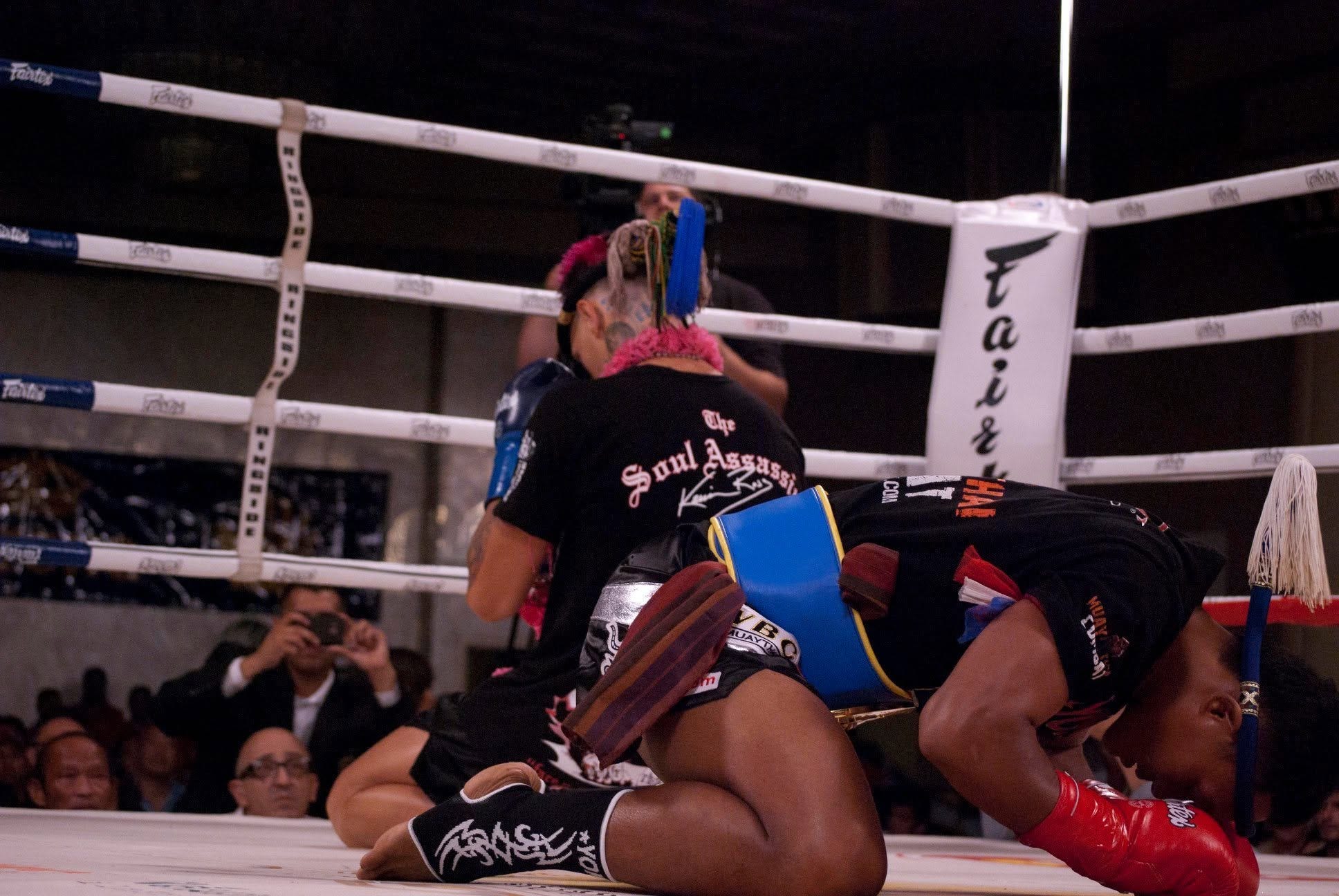
Don’t watch somebody’s highlight reel – go and see what happens when they get hurt, when they get knocked out.
My very first highlight reel I ever had made, I had the entire first minute of me just getting the shit beat out of me because I didn’t want people to have this misconstrued perception of what it’s like to fight.
Anyone can look good when they’re doing good – what happens when things go wrong. Everyone wants to do this when they see the highlights of it or they see people getting attention off of it but what about when everyone’s shitting on you and telling you that you need to give up and you suck and you’re old and all this. Nobody wants that, you don’t want that, you think you want that, you want the rewards without the work.
M.W.: Yeah, the real tale of the tape comes after a victory or after defeat; the moves made between the wins and losses and knockouts define just as much purpose.
Your win against Lomurno, how do you stay humble when you’re at the top?
K.R.: For me that comes from always maintaining that beginners mentality.
I’ve never looked at anything I’ve ever done and felt ‘I’m this person now’; there’s certainly good and bad to that. I mean, the good is that it always kept me in that mind frame but the bad is that you need to have some level of ego when it comes to fighting and being the best, but I just never did.
I was still able to make it to where I got to but I think that did limit me in a couple of ways. I wasn’t driven by ego. I’ve seen how much it can help people out. I was able to do it without that.
Part of my issue was always that I wanted to fight people out of my league because that makes it to where I’m forced to push myself to that higher level. When I’m going up against people that I’m above, I always bring myself to whatever level of person’s infront of me.
It’s very hard for me to push myself when I’m not threatened with my life, because I don’t have an ego about it, I don’t need to destroy you. I think that’s the one thing that separates the good from the best ever when you look at, say, a Mayweather.. I don’t think it’s a necessity but it’s certainly something that goes across the board of the greats – they all had that level of ego, and I just didn’t have that.
M.W.: You seem to have a certain reverence for fear, the way you get into the ring, the ritual you have around it – there’s an element of respecting fear. It’s a win/lose, if you don’t have the ego driving you, you have this overbearing respect for fear.
K.R.: Part of it for me was that I cared more about the fight than I did about winning it.
That external drive people have of wanting to be looked at as the best, I didn’t give a shit about any of that at all. I just loved to do this so much, I want to do it all the time.
That drive to show that I’m better, I didn’t care. I just wanted to feel good about what I did in there. There were a couple of fights I had where I tried to adjust the way I fought to fit.. say in Thailand, I have to fight this guy this way – anytime I did that, I so regretted it. It only happened 2-3 times in my career and I never forgave myself.
M.W.: Because you weren’t authentic?
K.R.: Exactly. I didn’t feel authentic. I couldn’t look at that and say ‘that’s me in there’; I’m trying to be something to fit a certain criteria. I don’t care about that.
I’d rather lose a fight knowing I was authentic to myself and that translates to my life as well.
The rule is fucking brutal.
M.W. That’s what carries you through all the negative outcomes you hit – the ACL, the snapped thumb, the razor wire split decision against Yamato or whatever.
When you’re authentic about yourself, meaning comes from within, it’s not external validation.
But when you deal with a setback on top of a setback, after a setback, how do you find a way to turn that into something positive?
K.R.: I’ll continue going back to that beginning – you always have a choice. You still have a choice. It’s easy to lose sight of the fact that you still have a choice, you still have to go left or right.
No matter how hard it is, how difficult it is, how many times it happens, whether or not you let that beat you down is your decision. It’s still the same exact process no matter which direction you go.
If you know how to get good at one thing, you know how to get good at another thing. When you boil it all down to the fundamental aspects of that progression or that regression, it’s the same, it’s always the same, it’s no different.
And I think that’s what angers people a lot, people that don’t go after what they want to go after in life and then later on they’re very angry and pissed off all the time and depressed. I think because, intuitively, they know that they had a choice.
When I lost my first fight, in my mind I thought ‘oh when you go after this, the seas are going to part and I’d just walk down the middle’; very often, it’s the opposite – when you’re going after something like this, it’s going to be the most difficult thing you’ve ever done in your entire life.
Once you accept that, just like fear, you’re not going to get rid of it, you’re not going to get rid of failure, you have to accept that these things are going to come with the path that you’ve decided to take.

Failure’s gonna come, injuries are gonna come, maybe even death is gonna come and I accepted that day one.
I don’t approach my life as if I’m supposed to have this long.. Everyone thinks they’ll die in their bed when they’re 90 and then when something happens, they feel cheated; who told you that you deserve to have this easy long life? Why do you think that? You told yourself that. All you have to do is look around the world to see that’s the exception, not the rule.
The rule is fucking brutal.
You’re not a victim, you’re not a victim of anything – just because you’ve been victimized. Throughout my childhood, I felt very much like a victim. I had been a victim. I think having a victim mentality – that’s where the choice lies.
You have a lot more control than you think you do. Especially when you focus on the aspects of life that you have control over. Letting go of the things.. we put so much time and emphasis on these things that we have zero control over, zero input over.
M.W.: From fight to fight to fight, when you’re in the ring, there’s only so much you can control. It’s kind of a paradox because, while we have the ability to make a choice, much of the choices are outside of our control..
How do you discern what to train for, what to account for, how to balance out what’s in your control and what isn’t?
K.R.: For me, I’ve never been someone who was overly focused or concerned about who I was going in there against.
So I didn’t get too fixated on certain techniques. That was just the way that I approached it, what worked for me, where there are certain individuals where it works for them.
For me, anytime I try to put more emphasis on that, I didn’t find it helpful.
Focus on the fundamentals and then the complexity comes out through that.
M.W.: What about the all-elbows assault against Yamato?
K.R.: Haha yeah that’s just.. Things come out.. So much of my style and the way I did things.. I tell people that most of these things, I didn’t drill this sweep or these elbows.
What fighting should be is understanding each weapon you have individually and once you’re in there, you’re able to let go and be creative with it.
That’s where the art comes in. Once you have all these tools developed, it’s just a matter of how you’ve put them together.
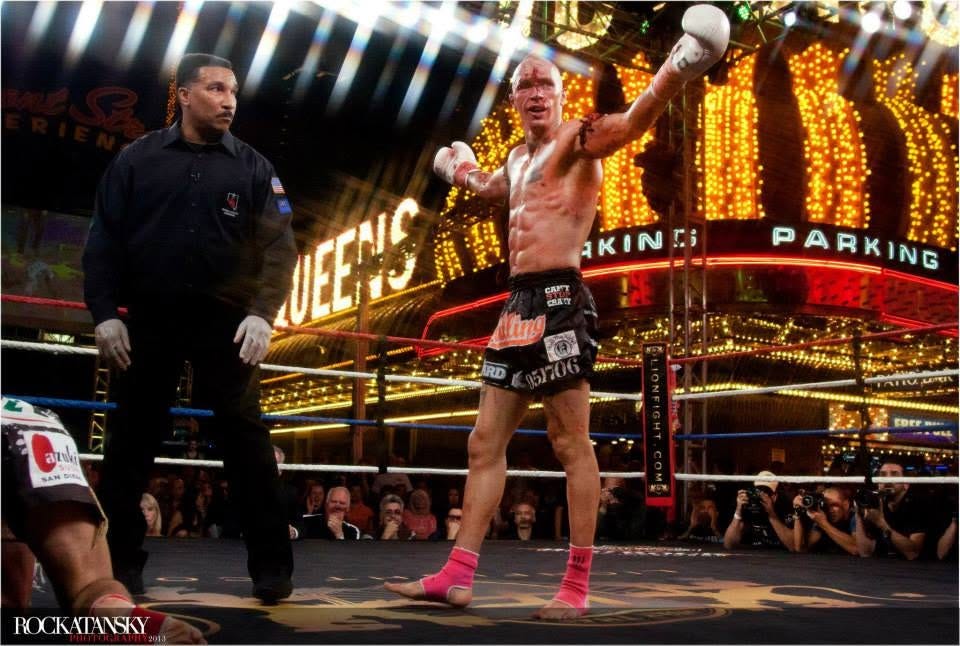
Where most people especially these days, in particular American’s, we try to have this group of weapons together – a combination, a group of movements - which comes with a lot of assumptions, like ‘this is the way it’s going to be.. this is how I’m going to do it’, but once you’re in there, this isn’t how it works at all.
And it’s very easy for someone like me to see whether a person trained in a very structured manner or whether they trained in reality, with all the variables that come into play.
That’s where that Thai style approach to training and fighting really works, and why they’re the best at it, because all they do is focus on the fundamentals and then the complexity comes out through that.
M.W.: We have an inherent tendency to want to construct answers out of everything but you can’t always do that, especially in such an instinctive field like martial arts.
K.R.: And a lot of that comes from essentially wanting to get to the end of the race before you’ve gone through the race.
Everybody wants to be at the end not understanding that you need the process.
It’s the same with strength or intelligence or anything you want to get good at – there’s a reason it takes time and an infinite number of variables that you need to have an understanding of.
If I just gave you this strength, you’d hurt yourself; here’s the muscle to lift this way but you don’t have the bone density to hold the weight. That’s where you see a lot of guys breaking their shins.
Certainly there’s an aspect of ‘shit happens’ but there’s so much where it’s shin conditioning, placement, timing, rhythm, and people think it’s just as simple as ‘well if I do some bag work sometimes and fight once in a while, I’ll have super hard shins’. .
If you apply that to everything, you can get good at anything – you can get strong, get dense bones, get intelligence.
When I lost that first fight, I realized that I have no idea where I can get to and I might not be able to get to, where I thought I could go or where I wanted to go, but I’ll never know where that end is unless I keep going forward.
Once I made that decision, I applied that to everything.
You have this moment, what are you going to do with it? Every moment, every day is all that we have. If we think about the past, we think about the future but this present moment is all that you have.
I’m not gonna get lost in the chaos.
M.W.: If you could go back, is there anything you’d tell your younger self to do different?
K.R.: No, it’s one of those things where if you go back and change one thing, you change everything.
I was very fortunate to have a lot of these things, whether I really understood them or not; thinking intuitively and instinctively, the people I was surrounded by – I came up under Thai’s so that helped to have that very disciplined emphasis on fundamentals and not having somebody baby you through your training.
One, that’s the way that I was already; two, that’s the culture I came up in; three, the time that I came up in was a time when nobody knew what Muay Thai was. Even MMA and UFC were in their infancy. There was nobody doing this for show.
M.W.: Everything functions as just another variable in this whole process of getting information – that’s what makes us evolve and makes us interested to evolve in the first place.
Failure is probably the biggest thing that gives us information but we treat it with this grand sense of aversion despite the fact that it carries the most information and it carries the most momentum for instigating the changes that we need.
Now that you’re retired professionally, do you still encounter failure in a lot of things you’re doing?
K.R.: Of course, I deal with it the same way I dealt with it in fighting.
I still train, I was still sparring with everyone up to two years ago and then I got vertigo real bad for a week or two.
I asked, why am I still getting my brain bashed in?
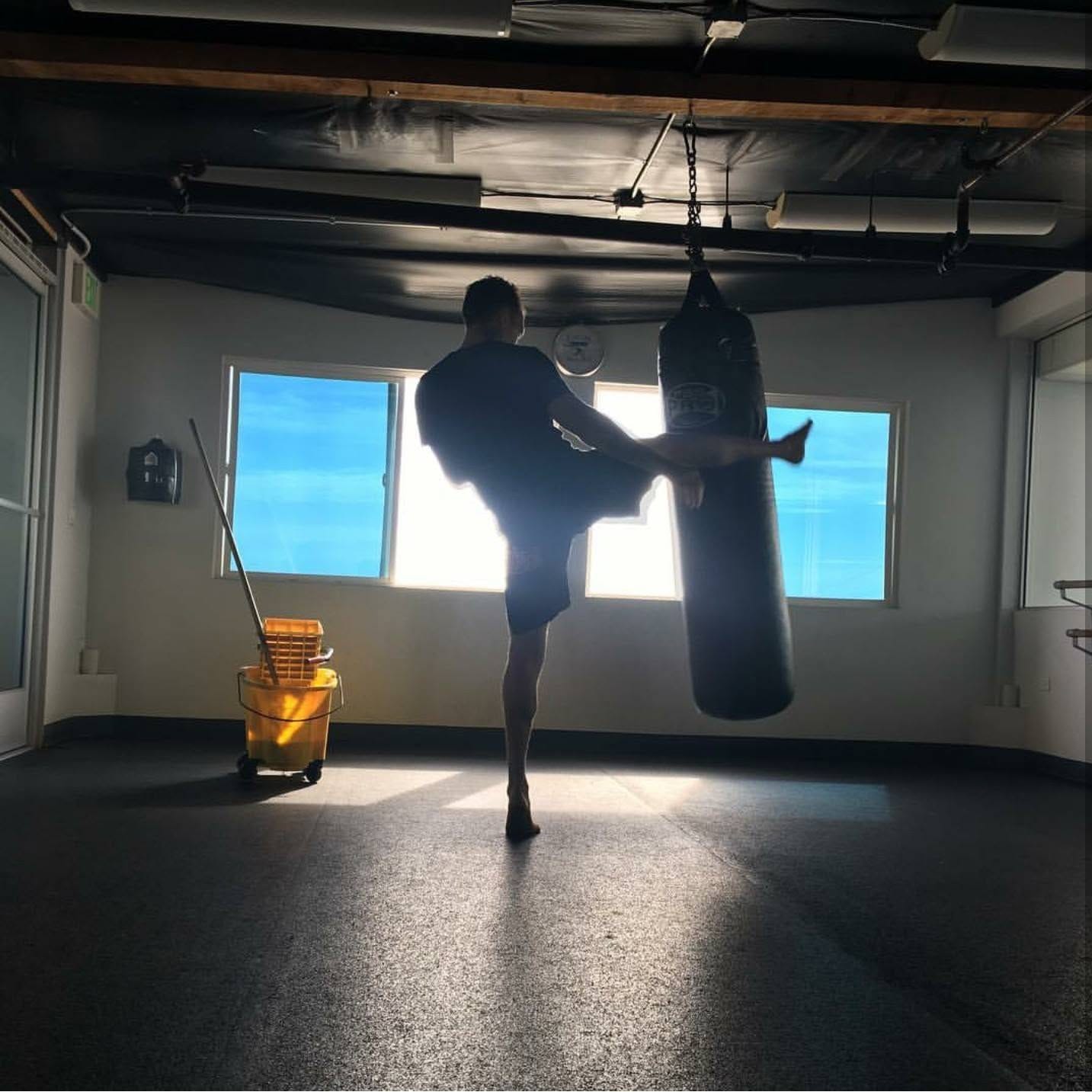
It was one of those things where I need to have that drive to push myself. I need a challenge to drive myself, whatever it is, and for me I need a physical challenge because for me I understand the translation between that physical challenge and every other aspect of life.
I know that if I’m challenging myself physically, every other piece of my life I’ll be able to handle better. I’ll have a better perspective on it. I’m not gonna get lost in the chaos. Doing a physical thing forces you to be present and when you tap into that presence, you strip away a lot of the excess, a lot of the noise.
“It has nothing to do with how you feel; it’s about not letting those feelings dictate or impact your actions. I’m going forward and there’s nothing you can do to stop me.
Fear is something that every person on this earth deals with; the only difference is whether we use it to build us or allow it to burn us to the ground…
The lessons never end and it never gets any easier. We learn, we grow but as long as we are breathing, there will be more tests and battles to face. Accepting and understand this is one of the key differences between those who let these things destroy them and those that use them to build themselves up.”
- Kevin Ross
Kevin is now turning his love of Muay Thai towards Jiu Jitsu and using all his previously learned lessons to quickly advance in a new art.
Follow Kevin Ross on Instagram or at www.thesoulassassin.com